Tuesday, 28 April 2009

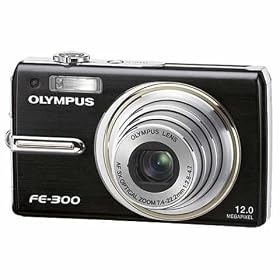
Olympus Black 12MP – Captures Every Daring Task You Do

Are you an adventurous person who loves skiing, diving, and snowboarding? You would definitely want to capture all those moments and show it to your friends. Then, the Olympus Black 12MP Digital Camera is the right choice for you. It is built to withstand some of the harshest climatic conditions. So, if you climb a windy mountain peak or if you decide to dive into rough waves, you can still take blur-free images with the Olympus Black 12MP Digital Camera.

The Olympus Digital Camera has some brilliant features like Dual Image Stabilization to get good shots, thanks to the 2-in-one, anti-blur solution. Its Sensor-Shift Image stabilization combined with Digital Image Stabilization helps you capture clear images virtually in any condition.

Some of the highlights of the Olympus Black 12MP Digital Camera

1. Shockproof – Accidental drops will no more affect your camera! Not even a 6.6 foot drop! With a rugged metal body and shock absorbent technology, it is designed to withstand unintended bumps and drops.

2. Waterproof – Be it on land or underwater, the Olympus digital camera will give you vibrant images. This lightweight camera has stainless steel and aluminum exteriors that are matched with interior rubber gaskets and O-rings to seal out water. So you can take beautiful images up to 33 feet (10 meters) underwater. 3. Freezeproof – Did you miss taking pictures in the snow because your old camera didn’t allow it? Worry no more, buy the new Olympus Digital Camera that clicks away shots even in cold mountains. 4. Crushproof – Sporting a crushproof camera body, it features an advanced hyper crystal LCD that can endure up to 220 pounds of pressure, so your camera and images are protected.

A 3.6 wide-angle optical zoom, versatile memory, shadow adjustment technology, perfect shot preview, and LED illuminator are other fascinating features in the Olympus Digital Camera. Don’t just wait. Pack your bags and get ready to capture everything with the stylish Olympus Black 12MP Digital Camera.

ArtDio 2.0 Multimedia Sound System- For Excellent Audio Experience

enjoy listening to my favorite music as it’s a great source of relaxation. I love to play music tracks on my PC, as it lets me work more peacefully. But, when I added the ArtDio 2.0 Portable Speaker System, the experience was heavenly.

A standard 3.5 mm stereo input connection and headphone jack integrated in the ArtDio 2.0 Portable Speaker System makes it compatible with all audio sources. This versatile system can also be used as an iPod speaker system as well. ArtDio multimedia sound system has given a new dimension to the music on my iPod. I have listened to many sound systems over the years, but I have to admit, I am quite impressed with this system.

Design and StyleThe ArtDio 2.0 Portable speaker sound system is ideal for users who want the utmost sound quality without compromising on design and style. It sports an attractive look, and also includes advanced features to provide a great listening experience. This multimedia sound system requires only 10W of power to deliver exceptional audio quality. The system includes a conventional LED indicator to inform you of the power status. With a 2.5-inch full-range drive, it is designed to reproduce maximum audio frequency range as possible. Moreover, the system is magnetically shielded to prevent disturbance due to interference from other devices.

This high-end multimedia sound system also comes with easy-to-use features. The ArtDio 2.0 Portable Speaker System has side panel volume and tone buttons that enable easy access to control functions.

Now, you can spice up the audio on your PC or laptop with this ArtDio 2.0 Portable Speaker System and enjoy clean, crisp, consistent sound from your games, music, and more. And I guarantee you that when it comes to sound experience the ArtDio 2.0 Portable Speaker System will not disappoint you.

Gazelle Versus Dedicated Trade Sites

When it comes to selling our electronics online there is no need to go haring off like a Gazelle to a site, just because it´s the first one you have heard of – there are now many alternatives online and if you are not careful you miss out on some great opportunities. Sites such as Gazelle offer some great advice, and possibly a good service in some areas, but what Gazelle lacks is what seems to be the way forward – dedicated sites for specific gadgets, gizmos and electronics.

Gazelle are a general electronics buyer, not a specific electronics buyer, this means if you want top prices paid when you sell your electronics Gazelle may not be the first and best choice, and it may be worth doing a little homework to find a site that specializes in whatever you are selling, whether it be a cell phone, iPhone, or laptop – Gazelle will give you a reasonable price for this, a dedicated site will give you a great price. Consider this fact alone before you sell or trade online and you can benefit greatly.
Ok, so we know Gazelle are well established online, and they have a fancy looking blog with Gazelle splashed all over it, but what we don´t find so often is a positive review, or a general review about Gazelle – trying to find one of these through search engines is not an easy task. For me this says Gazelle offer a standard service, where as other sites I have seen video testimonials which knock spots off of written testimonials by Joe Bloggs, so for sure Gazelle offer a service, but with seeing video testimonials I am driven to these other sites first and foremost leaving Gazelle in the background, and time and time again this proves to be the better option.

When looking over some sites to sell my electronics one thing I always look for is the layout, use and navigation of the site – Gazelle seem to have some things tucked away that make using their site not as easy as I would like, for instance, you can view Gazelle´s privacy policy and contact Gazelle if you have great eye sight and can see the very light colored links at the bottom of the page – for me this says that they would rather you didn´t see these things, and immediately I question the service I would receive from a company like Gazelle that try to avoid some points of the trade.

To summarize, I am not telling you to never trade with a site like Gazelle, I am merely telling you that dedicated sites can prove extremely beneficial and a better option than Gazelle, for instance check out www.cash4laptops.com, see their layout, the friendly usability of the site, and the ease of navigation – to me this shows dedication and quality which are two things we must have when we trade online. At the end of the day it is your choice, go with Gazelle and see what happens, or choose a dedicated site and know what to expect.

Sony Ericsson W910i Black Contract Deals on 3 – Heart Throb of Young Generation

Sony Ericsson W910i Black contract deals on 3 are the best cell phone for the users who like to have stylish cell phone. It is not only good looking but also trendy, which is highly liked by the customers in the present scenario. Being very light weight and magnificent, it can be seen in the hands of numerous customers. It comes with a large screen of 2.4 inch 262k TFT color screen with the resolution of 240 pixels by 320 pixels. To capture brilliant images a 2 mega pixel camera is also there with 2.5 digital zoom. With the help of digital zoom feature the users can click their photos even in dim light. Sony Ericsson W910i Black contract deals on 3 comes with the features of latest technology through, which you can connect this gadget with other compatible devices.

Music lovers can find a walkman music player to play their favorite music while on the go. Music control feature is also there to control the music. Its music software is able to send and receive music, video and photos from their handset to another handset and vice versa. The users will find another music option in the form of FM radio through, which you can not only listen to your favorite music but also world wide news. If the users want to play their favorite song, there is a track id option to play favorite songs soon. Moreover, the users can download musical ring tones from internet or games. Downloading to songs is very easy.

Sony Ericsson W910i Black Contract is available on contract deals on 3. Being available on 3 three contract deals, the users can purchase this cell phone on the best contract deal which suits their calling pattern and can save a lot of money. In this way it is a best cell phone in every way.

Nokia gets thumbs up from China

Following on from the distribution of 3G licences earlier this year for China’s three mobile networks, China Mobile, China Telecom & China Unicom, along with the convoluted technology demands imposed by the regulator, signs are that Nokia will be sitting a little higher up the table at the tea party, as Chinese news portal Xinhua reports :

“China hopes Nokia will enhance cooperation with China’s information sector and play an active role in developing China’s TD-SCDMA industry, Chinese Vice Premier Zhang Dejiang said”

As we reported earlier this year, China looks to 3G networks to help stimulate economy, each of the operators is working on a different standard, China Telecom will work on the US standard CDMA 200, Unicom has gone down the W-CDMA route, whilst China Mobile has invested a veritable fortune in its home-grown standard TD-SCDMA.

From a political standpoint, it is pretty much a given that TD-SCDMA will not be allowed to fail, as the government is very much behind these moves. So what does this mean for equipment vendors ?

Basically, it has resulted in Western vendors like Alcatel-Lucent & Ericsson being marginalised when it comes to participation. Alcatel has managed to win business in 14 regions to partially satisfy China Unicoms requirements, whilst also signing $230 million worth of contracts with China Telecom.

“The drive for 3G (in China) is a very important stimulus for what I think is a very exciting market to come,” Ben Verwaayen, chief executive of Alcatel-Lucent, told reporters in Beijing yesterday. “If you look to the market and the economic crisis today, it is good to see that China is going to play a more prominent role than ever before.”

Ericsson has stated that it has picked up 30% of China Unicoms 3G network requirements, leaving Chinese vendors Huawei & ZTE to fight over the spoils, with Huawei reportedly being the big winner.

So what about Nokia ? Back in March, Nokia-Siemens Networks (NSN), a subsidiary of the Finnish mobile giant, announced the signing of framework agreements with both China Mobile and Unicom for up to US$1.1 billion in orders. NSN is one of the less recognised parts of Nokia’s business, however, it is definitely a division not to be ignored, showed that NSN contributed 34% of group revenues.

Nokia has already provided major infrastructure deployments on China Mobile’s Phase II deployment of 3G network, on its testing rollout in Hainan province. Now with equipment currently being deployed across 28 major cities throughout China, Nokia Siemens Networks has provided the top performing city networks based on 3G TD-SCDMA commercial readiness, as laid down by the Chinese telecoms regulator.

“We are very confident of our 3G TD-SCDMA solution and feel proud to showcase its capabilities. Nokia Siemens Networks has provided us such tremendous on ground support, that our 2G and 3G TD-SCDMA networks are optimized and ready to handle high throughput and access rates demanded by cutting edge applications,” said Zhou Chengyang, President of Hainan MCC. “We have laid a solid foundation to launch commercial services in the Hainan province and are looking forward to working closely with Nokia Siemens Networks towards large scale and high quality TD-SCDMA services.”

So the expectation is that this suuccess will bleed over into Nokia’s main revenue driver, handsets. China Mobile is now becoming more of a commodity player with regards to handsets, as it is now looking to more rural areas for subscriber growth. My expectation is that Nokia will play a major part in this area, as discussed in a previous post, Nokia has a very strong back-catalogue of handsets to pick from & also enjoys higher margins in the low end sector than its competitors.

Monday, 27 April 2009

Cheap Mobile Phone Contracts- Cheap And Affordable Deals With Several Advantages

Who will not dream of a mobile phone with many features on low price? The mobile phones have become so common these days that the people have become habitual of their features. Regular calling, messaging, downloading games and ring tones are the ordinary features that a customer wants in a handset. Besides these, the user of the mobile phones wants that there should be a hurdle free flow of communication through the mobile phone he is using. However, he doesn’t want to pay much high process for all these features. Is there any deal which contains all these features altogether?

All such advantages can be made available to you only through the cheap mobile phone contracts. These are a kind of deals initiated by the prominent mobile manufacturers together with the excellent service providers. They provide the users with all the features liked by them on the lowest possible prices. The users can have any kind of handset with the most suitable network.

In the cheap mobile phone contracts you can go for a contract of 6 to 18 months approximately for the service. These contracts make it possible for you to have the budgeted expenses on these mobile phones. You may choose any one out of the prevalent networks like T-Mobile, Orange, Three, Virgin, Vodaphone and O2 etc. as per your requirements.

There is a choice of the handsets before the users among Nokia, LG, Motorola, Samsung, Sony Ericsson mobile phones etc. Depending upon the features of these handsets, you can make the best decisions and have the charming look with these handsets. These deals will also facilitate you with some additional advantages along with the connection. These can be anyone among the following:

· Free talk time
· Free downloading
· Free line rental
· Multimedia messaging
· Mobile phone accessories
· Free text messaging, etc.

For all these additional features, the users are not asked to pay extra charges. Thus, the deals can be afforded by the users anytime they need the latest handset with marked benefits.

Benefits Of Mobile Marketing

Mobile marketing has become one of the popular and viable marketing strategies for businesses to enhance their market opportunities. Mobile marketing is highly interactive, measurable, personalized, and cost-effective. The features of mobile marketing are helping many organizations to reach their target audience more effectively.

Since mobile phones are personal devices, marketing through them will help an organization to communicate with their customer directly without constraints like time and place. Mobile marketing allows organizations to segment customers demographically and target them on a one-to-one basis.

Better ROI
Unlike many traditional forms of marketing, mobile marketing enables the marketer to interact directly with their customers. Since it is a one-to-one way of communication, it is feasible for the marketer to target psychographically who are likely to become prospective customers. Consequently, it saves money and time from investing on irrelevant set of audience. Mobile marketing also allows the marketer to track the message delivery rate, response rate, and sales conversion rate of his campaign. These attributes of mobile marketing help organizations to enhance their ROI.

Cost
With the increased competition among businesses in recent times, it has become essential for an organization to adopt an effective marketing strategy to stand out from the competition. At the same time, it is not feasible to allocate a hefty amount of budget for marketing itself. In these circumstances, mobile marketing enables the marketer to reach to a wide range of audience affordably, compared to many other traditional ways of marketing.

Diversity
To attain a remarkable success in the marketing campaign it is not feasible to adopt a strategy that cannot comply with the diverse range of customers. Many traditional marketing strategies do not have the required potential to communicate the brand message of the organization effectively, to the diverse range of targeted audience. The suppleness and comprehensiveness of mobile marketing enables it to reach to a broader and diverse range of audience more effectively than other traditional marketing methods.

Consumer Response
Mobile marketing enables the marketer to reach to a wide number of audiences directly within a short span of time. Thus, the marketer is likely to increase his response rate, compared to many other marketing strategies. The personal approach of mobile marketing results in increased consumer response and sales conversion rates.

Potential for viral marketingMobile users are very likely to forward useful and important messages within their groups. It is easy and effective way to share valuable information. Since, this feature of mobile phones is compliant with the mobile marketing; it has very high potential of boosting the viral marketing.

Mobile marketing is also easy to operate, compared to many other marketing strategies. Since mobile marketing is measurable and inexpensive, it enables the marketer to reduce the risks of business investment on a marketing campaign to a significant level.

Sunday, 26 April 2009

Bulk SMS as a Marketing Tool

Bulk SMS servers will have a huge database containing mobile information of the recipients. SMS has gained popularity in the 21st century and the companies, seeing the popularity of SMS, use SMS for marketing their products. As business involves large target and mass campaigning, it is not an easier task and so they have thought of a marketing tool that can be used for campaigning about their products. Hence the new concept created is the Bulk SMS or Bulk Short Message Service. Bulk SMS is an exclusive type of system that an organization or an institution can be enabled for sending or receiving large number and volume of SMS or simply SMS in a bulk. The Bulk SMS follows a specific channel with particular bandwidth limitation. Bulk SMS senders can also receive delivery reports for the sent SMS.

The most useful feature of the Bulk SMS is that a single SMS can be forwarded to several users. You, as a sender, can decide the number of recipients. Minimum number of recipient is 1 and can be increased to a huge digit number also. Each and every user will be having a unique sender identification tag generated and the sender while sending Bulk SMS uses the same ID brand. Another important feature is the group functionality of the Bulk SMS. Many reputed companies are making use of Bulk SMS for promoting their product because of its low cost nature. Bulk SMS saves more money than print media campaign and is estimated to save up to 30 % of the total amount spent for printed media campaigning. Bulk SMS is highly dependable as the network c overage is good for a huge network area. Other than for promotional campaigns, it is also used for purposes like intimations and instructions. Bulk SMS is used for sending a message to many mobile phone users instantly. Another biggest advantage of Bulk SMS is its low cost factor as mentioned earlier.

Nowadays SMS messaging and Bulk SMS to friends are favorite time pass for youths. Even if you want to campaign for your product in the market, you can choose the Bulk SMS method, as it is the latest weapon used in the competitive business field.

The advantages of Bulk SMS in business are cost effectiveness, time saving, instant delivery of messages and instant measurable response for the sent SMS from the recipients. The Bulk SMS can be delivered without any geographical boundaries with guaranteed delivery to the recipients. This provides the users an opportunity to subscribe on the particular website for text messages relating to specials and promotions. In Bulk SMS the mobile unit of the user receives the message when the unit is on air and hence to receive a message it need not be switched on. As most of the mobile phone users use their phones most of the time, messages are checked before deletion and so the response time for the Bulk SMS will be within 48 hours after the user receives the message. The sender, after typing the SMS text, can send the bulk SMS to the recipients’ mobile phones. An important thing to be focused is the number of characters used in a SMS need to be restricted to 160.

Web SMS: A Revolution in Communication

SMS technology is not new to the communication world, as it has been successfully used in the mobile phones and similar handheld devices. Recently the SMS technology is effectively and easily utilized through the web. A website enabled with SMS can do a lot of things easier and faster. Web SMS is used for verification of user accounts, marketing campaigns etc. and the opportunities are endless. The SMS providers are making the implementation process so easy and it's like simply jumping on a bandwagon.

Web SMS technology utilizes SMS messages by means of websites and similar web based applications. SMS are sent manually, automatically or by alerts or by triggers that are specified by the site administrator. This exceptional technology through the Web creates a whole new dimension to online activities. It also exposes the user's online presence to the audience in a different platform. Web SMS are applied in websites and in overall business practice in various ways. Some of them are:

Through web SMS, a message can be forwarded to a website's owner if a new order needs to be placed by means of their online store. If you are a new user who wish to join a website, through web SMS you can send them a verification code to their mobile so that the details furnished are correct. SMS text messages are used as effective marketing tool for marketing purposes. Web SMS is used for marketing competitions, product releases, give away's and campaigns. If your website is community based, you can provide free SMS service to your users with limited numbe
r of SMS messages free per month. Due to any technical reason if any error occurs within your enterprise web based application level, you can send a web SMS message to your site administrator in order to notify about the problem's occurrence. By using "Contact us form" many users will submit information and the reply can be sent through web SMS to the concerned person instead of sending emails. The users can also SMS to the website to update their details, response submission and for posting messages online.

From the above, you can see that the uses of this technology though World Wide Web are numerous. Applying Web SMS to an online store or to a website not only streamlines the workflow but also brings a more effective, efficient and user-friendly experience. As business is about customer service it can be achieved successfully by applying Web SMS in all the areas of business.

The main advantage is web SMS is free. Though SMS via mobile phone seem to be cheap, but when you send many SMS the price to be paid mounts up. Web SMS are quicker and easier to write and edit than mobile phones. Even the recently introduced mobile phones provide predictive text messaging and it is difficult for the user to write messages. You can use only one finger to type messages in a computer and is quicker than writing in cell phones and strain is less for the fingers also. Web SMS can be scheduled based on priority and there is no necessity to send all your SMS immediately. Web SMS are mostly free and no international rates are charged.

Young People and Cell Phones

Cell phones are getting very popular with everyone now these days. They are so popular and there are more people getting cell phones, even younger people are getting in on the fun. That is right; it is common for a young person like teenagers to be carrying around cell phones.

There is much debate to whether or not it is appropriate for a teenager or youngster to have their own cell phone, to use it, and carry it with them. Some people feel that it is not right for them to have and there are others that feel it is a good thing and feel safer knowing their child has a cell phone with them at all times.

You may feel better and safer knowing that your child has a cell phones with them wherever they go. This will give you the security of knowing that you will always be able to get in contact with your child if there is a problem or even if you just want to say hello.

If your child gets into trouble, it may be a life saving feature, if they have a cell phone handy to call for help. Times are changing and the world is not as safe as it once was which is one reason many children have such phones. It will make them and you feel a lot safer knowing that they will have a cell phone to call you for help if they ever get into a bad situation.

If your child has a cell phone, make sure that they know the when not to use their phone. They should never be using the phone in school. In most schools, if you are using the phone in school, it may be 'taken' from you by the teacher. Once your cell phone is taken from you at school, you may not get it back until the end of the year and parents are stuck paying for that phone even when it is not being used.

You should also tell your child to be careful with the minutes. Tell your child you only have a 'certain amount' of time on the phone and explain the cost of the phone to them. If your child knows it is expensive to have a cell phone, they may be a more careful with it and use it less. Make sure they know how important it is to keep it safe and not to loose it or lend it out to anyone or it will be gone.

Samsung G600 or Samsung J700 - which one is better?

On the surface, the Samsung G600 and the Samsung J700 look similar, but how similar are they really?

Both devices are slim and slender, compact candybar style slider phones (which means they both come with a slide-out keypad). They also both just about the same size - with the G600 being 101 mm x 47.8 mm x 14.9 mm as compared with the J700 which is 99.5 mm x 48 mm x 14.8 mm. The J700 is, however, a bit lighter weight than the G600, weighing in at 92 g to the G600's 104 g.

The G600 has a 2.2 inch display screen with 240 x 320 pixel resolution and is capable of up to 16 million colors. The J700 has a slightly smaller 2.0 inch display screen and only 128 x 160 pixel resolution, capable of just 65,000 colors.

Both of these phones run on the AT&T EDGE network, and neither of these phones support 3G speeds. Both phones have Bluetooth v2.0 with A2DP and a USB v2.0 port, but neither one has Wi-Fi.

The G600 features a speakerphone but no photocall, while the J700 features the reverse - photocall but no speakerphone. The phonebooks in both devices, meanwhile, are each able to store 1,000 contacts, but the G600 can save 10 more each of your dialed, received, and missed calls than the J700 can (with 30/30/30 versus 20/20/20).

Along the same memory-related lines, although both devices sport microSD card slots for expandable storage, neither of these smartphones has very much internal memory, with the G600 having 55 MB and the J700 having 10 MB.

Similarly, the batteries powering the two devices are similar - both Lithium-Ion batteries - but the one with the G600 is slightly more powerful, able to retain a charge for up to 300 hours of standby time and 3 1/2 hours of talk time versus up to 250 hours of standby time and 3 hours of talk time with the J700.

Similarly, the batteries powering the two devices are similar - both Lithium-Ion batteries - but the one with the G600 is slightly more powerful, able to retain a charge for up to 300 hours of standby time and 3 1/2 hours of talk time versus up to 250 hours of standby time and 3 hours of talk time with the J700.

One enormous difference between the two Samsung devices is their digital cameras. The G600 has a 5 megapixel digital camera, but the J700 only has a 1.3 megapixel digital camera. Plus, the camera on the G600 includes autofocus, image stabilization, and LED flash, whereas the J700's camera has none of these. Both devices have some degree of video recording or capture and playback capability, but the G600's is better, being VGA capable at up to 15 frames per second.

For your music listening pleasure, however, both devices have a built-in MP3 player and an FM tuner (though the G600's is in stereo).

What is most surprising about these two smartphones, perhaps, is that it was the Samsung G600 that was released first, in July of 2007, while the Samsung J700 was released in February of 2008. You'd think it would be the other way around because the G600 seems like an upgraded version of the J700. So to sum up, unless you really want a pink smartphone (the J700 does come in black too, by the way) or unless there's a significant deal or pricing difference, then there's really no obvious reason to choose the J700 over the G600.

Samsung Tocco or Samsung Tocco Ultra - which one is better?

Is the Samsung S8300 (aka the Samsung Tocco Ultra) just an upgraded version of the Samsung F480 (aka the Samsung Tocco) or is there more to it than that?

Released just about a year apart (the Tocco in May 2008, the Tocoo Ultra in March 2009), both devices are HSDPA and 3G capable smartphones on AT&T's EDGE network with 7.2 Mbps network connectivity.

The Tocco is squatter (shorter and wider) than the taller and thinner Tocco Ultra, at 98.4 mm x 55 mm x 11.6 mm versus 110 mm x 51.5 mm x 12.7 mm. The weight difference between the two is a negligible 4.4 grams, with the Tocco weighing 100.6 g and the Tocco Ultra weighing 105 g.

The Samsung F480 (the Tocco) sports a TFT resistive touchscreen with 240 x 320 pixel resolution and is capable of 256,000 colors while the Samsung S8300 (the Tocco Ultra) has an AMOLED capacitive touchscreen with 240 x 400 pixel resolution and is capable of 16 million colors. Both devices' display screens are 2.8 inches.

The Tocco Ultra display screen also boasts some features its predecessor does not have - namely a scratch-resistant surface, an accelerometer sensor that changes views from portrait to landscape depending on which way you have the phone rotated, and a proximity sensor controlling automated turn-off.

The Tocco's phonebook can store up to 1,000 entries while its successor's can store up to 2,000. And while the Tocco has photo call, the Tocco Ultra has that and photo contact.

Surprisingly, the internal memory capacity of the original Tocco (at 232 MB) is significantly greater than that of the "upgraded" model, which only holds 80 MB. The microSD card slot on the Tocco, however, can only expand the device's memory up to 8 GB whereas the Tocco Ultra's memory card slot can increase its memory to 16 GB.

The battery life on the Tocco Ultra is also superior to that of the Tocco - by 1 hour of talk time (4 versus 3) and 100 hours of standby time (350 versus 250).

The digital camera on the Samsung Tocco is fantastic - a 5 megapixel camera with autofocus, LED flash, wide dynamic range, image stabilization, and face detection capabilities. The digital camera on the Samsung Tocco Ultra, however, is even better - an 8 megapixel camera with all the same feature's as its predecessor's camera, plus geotagging of photos. Also both devices have video recording capabilities and include a secondary camera for video calling, although the Tocco records QVGA video as compared with the Tocco Ultra which records WVGA video.

In terms of other general features, the Tocco has no GPS, while the Tocco Ultra has a GPS with A-GPS support. Neither device has Wi-Fi, but both have Bluetooth with A2DP - the Tocco having v2.0 and the Tocco Ultra having v2.1. Both devices also have a USB v2.0 port, though the Tocco Ultra also has microUSB. And both devices have an FM radio tuner with RDS, although the Tocco Ultra also has FM recording capabilities. Neither device has an infrared port.

The Tocco comes in black, brown, gold, pink, and silver. The Tocco Ultra comes in either red or blue. But color ought not be your final deciding factor between these two devices. The simple fact is the Samsung Tocco is great, but the Samsung Tocco Ultra is even greater. They might not look like different makes of the same model phone, but when it comes right down to it, the S8300 is very much an upgraded F480.

Turn Your iPhone Into a Remote Mouse and Keyboard

When I give presentations, watch movies from the sofa in my office, or need to start a task away from my desk, I don't want to be within arm's length of my mouse. So I appreciate the freedom offered by Air Mouse Pro ($6, buy-only), a full-featured remote control from R.P.A. Tech. The top half of the Air Mouse Pro Screen features a two-button trackpad, while the bottom half gives you a keyboard, along with controls for browsing the Web and playing movies and music.


Using the accelerometer and touchscreen of either an iPhone or iPod touch, Air Mouse works over a local Wi-Fi network to control you computer's mouse and keyboard. Before using the app, you do need to install a small application on your computer-there's a version for both Mac OS X and Windows users-which manages the connection and controls many of the mouse and keyboard settings.

The Air Mouse Pro screen features a two-button trackpad on the top half of the screen, while the bottom half switches between media control buttons and a keyboard. I found Air Mouse Pro to be as responsive and stable as my current wireless mouse, with touchscreen mousing no different using a computer trackpad.

Using the accelerometer to control mouse gestures is comparable to using a the controls for a Nintendo Wii-fun, though not always practical. You won't write novels with the app's keyboard, for example. But when combined with customizable keyboard shortcuts, Air Mouse Pro can be handy for conducting fast searches, launching applications, or, as Macworld editors have noted elsewhere, running a Mac-based media center. That said, the set of buttons for controlling iTunes and Web browsing, while useful, make the omission of presentation controls all the more glaring.

Still, Mobile Air Mouse is a genuinely fun and practical application for anyone who needs to break free of the desk.

Kate Dohe

Help With Handsets

Once you have selected a carrier or have decided that your choice of handset will determine your carrier, you are ready to start looking at handsets. To get a sense of what's available, read editorial and user reviews, including our Top 10 Cell Phone-PDAs chart and our Cell Phones & PDAs Info Center. For general guidance on features, consult "How to Buy a Cell Phone". Another great resource is PhoneScoop's Phone Finder, an online tool that generates a list of cell phones that match your stated preferences.

Before You Buy a Cell Phone


Today's wireless phones? Cool. Shopping for them? Complicated. Here's what you need to know about carriers, plans, data networks, contracts, and more.


Shopping for a new phone can be fun--but it can also be exhausting and frustrating. That's because picking a phone is just the start of the buying decision. You also have to settle on which carrier or cell phone service to go with, where to shop, and which voice and data services to choose. Do you get better deals online, in a store, or over the phone? Is it always a good idea to sign a contract to get the best price on a new handset? Who should consider getting an unlocked phone, and where can you find such phones? For the facts, read on.

Empty Promises

Blake DischerEven savvy shoppers can get caught in a tangle of conflicting wireless carrier offers. Susan Lewis, a quality assurance engineer from Monroe, Michigan, says that when she tried to get a local Verizon Wireless store to match a handset deal she saw on the carrier's Web site, the sales rep offered instead to give her a special price--50 percent off--on some accessories she didn't want.


Lewis ended up buying from a phone sales representative who promised to match the Web site's offer. But when the bill arrived, she saw that the company had not applied the incentives that she had been promised--namely, free activation and overnight shipping, along with instant rebates.


"When I went through telesales, I thought things would go smoothly," Lewis says. "The sales rep sounded very nice and reassuring. But when all was said and done, he caused even more problems. He was negligent either by omission or commission."


After Lewis complained, Verizon reversed the unexpected charges, but she remains disappointed. "I felt like I got a lot of hollow promises," she says.


As Lewis discovered, the deal you get often depends on where you shop--and the wealth of options can be overwhelming. But with research and planning, you should be able to beat the system and find the best deal.

Use Your Cell Phone as a Modem for Your PC

With the right cell phone and online data service, the Internet is just a call away.

Picture this: You're on a commuter train with no access to a Wi-Fi hotspot, landline, or ethernet connection, and you have to get online now. Hey, is that a cell phone in your pocket? Then you may be just a couple of clicks away from the Internet.

Many of today's handsets pull double-duty as a phone and as a modem for connecting notebooks and PCs to the Internet. With a few noteworthy exceptions (can you say "Bluetooth"?), setup is quick and easy. All you need is a phone with modem circuitry enabled, a wireless data-access plan that supports using the phone as a modem, and software for your computer.

AT&T, Sprint, and Verizon sell monthly data plans designed for people who want to use their phone as a modem (a practice sometimes referred to as "tethering"). If you use your phone in this manner on a standard data plan--not the carrier's phone-as-modem service--you may incur additional fees (for example, charges per kilobyte of data transferred). Though T-Mobile doesn't offer phone-as-modem service per se, you can use its Dash, its Wing, or any of a few other handsets as modems. You're on your own for tech support and drivers, but abundant tips are available at Howard Forums and About.com's Mobile Office Technology guide.

The carrier typically provides free drivers as downloads from its Web site, or on a CD. If the service's tethering application doesn't work with your cell-phone model, try a third-party program. June Fabrics' PDANet runs on Palm and Windows Mobile phones, while MobiShark's Shark Modem supports specific BlackBerry models. If you plan to use your cell as a modem only occasionally and are already paying your carrier for a monthly data plan, one of these apps may help you avoid extra fees for using your handset as a modem.

Most cell phones connect to a computer via USB cable, and many PDA phones come with such a cable. If yours doesn't, you will have to spend about $20 for one, or rely on a wireless Bluetooth connection. I used USB cables to connect phones from AT&T, Sprint, T-Mobile, and Verizon to a laptop running Windows Vista. See "Connecting via Bluetooth" for details on linking by means of Bluetooth. If your cell phone supports high-speed 3G data service, and you're in an area where it's available, you'll get download rates of 220 to 700 kilobits per second, comparable to slowish DSL. T-Mobile hasn't yet deployed 3G technology; its EDGE service is only slightly faster than dial-up. If 3G is not an option for your phone, the connection slows to about 50 to 80 kbps, about the rate of a dial-up connection. Of course, in a pinch, dial-up speed is better than no connection at all.

Any calls you receive while using your phone as a mo-dem will go straight to voice-mail. And if you place a call, your modem connection will end automatically.

Cell site

A cell site is a term used primarily in North America for a site where antennas and electronic communications equipment are placed to create a cell in a network. A cell site is composed of a tower or other elevated structure for mounting antennas, and one or more sets of transmitter/receivers transceivers, digital signal processors, control electronics, a GPS receiver for timing (for CDMA2000 or IS-95 systems), regular and backup electrical power sources, and sheltering.[1]

A synonym for "cell site" is "cell tower", although many cell site antennas are mounted on buildings rather than as towers. In GSM networks, the technically correct term is Base Transceiver Station (BTS), and colloquial British English synonyms are "mobile phone mast" or "base station". The term "base station site" might better reflect the increasing co-location of multiple mobile operators, and therefore multiple base stations, at a single site. Depending on an operator's technology, even a site hosting just a single mobile operator may house multiple base stations, each to serve a different air interface technology (CDMA or GSM, for example). Preserved treescapes can often hide cell towers inside an artificial tree or preserved tree. These installations are generally referred to as concealed cell sites or stealth cell sites.

Cellular network

A cellular network is a radio network made up of a number of radio cells (or just cells) each served by at least one fixed-location transceiver known as a cell site or base station. These cells cover different land areas to provide radio coverage over a wider area than the area of one cell, so that a variable number of portable transceivers can be used in any one cell and moved through more than one cell during transmission.

Cellular networks offer a number of advantages over alternative solutions:
increased capacity
reduced power usage
larger coverage area
reduced interference from other signals

An example of a simple non-telephone cellular system is an old taxi driver's radio system where the taxi company has several transmitters based around a city that can communicate directly with each taxi.

Security cellular telecommunications system

A cellular telecommunications system having a security feature which allows only pre-authorized users no complete cellular telephone calls. The system and method recognizes a cellular radiotelephone's pre-programmed a pre-selected telephone number and a automated number identification code (ANI). The pre-selected telephone number is reserved to the pre-paid cellular telecommunications system. The cellular radiotelephone transmits the ANI and a dialed number identification system code (DNIS) to a cellular switch, which contacts a host computer for call validation the pre-paid service provider.

Radio telephone system

A portable duplex radio telephone system includes at least one base station transmitter having a predetermined base transmission range, and a plurality of portable or mobile units each having a predetermined portable maximum transmission range predeterminately shorter than the base transmission range. Satellite receivers are deployed about the base station within the base station transmission range for receiving transmissions from the portable units. The base station transmitter transmits signals on a signalling channel and on at least one communications channel. Each transmitter signalling and communications channel has a frequency that is paired or associated with a receiving frequency of the satellite receivers. In a multiple base station system, the portable receiver has means for scanning the base station transmitter signalling frequencies and for tuning the portable transmitter to the signalling frequency associated with the frequency of the strongest signalling signal received from the base transmitter. When communication is initiated, the portable transmitter and receiver are automatically retuned to one of the communications channels as determined by the strongest signalling frequency received by the portable receiver and by channel availability. Means are also provided in the system to continuously locate a portable unit and switch the operating frequency thereof as the portable unit moves between base station transmitter coverage areas. Further means are provided to automatically reduce the output power of each portable transmitter to the minimum level required for satisfactory communications in order to reduce battery drain and the interference caused by the portable transmitters.

Saturday, 25 April 2009

Cellular phone system wherein the air time use is predetermined

A cellular phone system in which a cellular phone user (CPU) has a cellular phone with a predetermined amount of available airtime. The CPU prepays for a particular number of airtime units. When a cell site receives a call from the CPU, the cell site communicates with a mobile telecommunications switching office (MTSO), which recognizes a unique serial number from the cellular phone. The MTSO directs the call to a prepaid airtime transaction tracking interface (PATTI). The PATTI then checks whether the CPU's account has any available airtime units and may indicate the number of units to the CPU. If none, the PATTI does not answer the call; otherwise, the PATTI connects the call and deducts airtime units until the call is disconnected.

History of mobile phone

This history of mobile phones chronicles the development of radio telephone technology from two-way radios in vehicles to handheld cellular communicating devices.

In the beginning, two-way radios (known as mobile rigs) were used in vehicles such as taxicabs, police cruisers, ambulances, and the like, but were not mobile phones because they were not normally connected to the telephone network. Users could not dial phone numbers from their mobile radios in their vehicles. A large community of mobile radio users, known as the mobileers, popularized the technology that would eventually give way to the mobile phone. Originally, mobile phones were permanently installed in vehicles, but later versions such as the so-called transportables or "bag phones" were equipped with a cigarette lighter plug so that they could also be carried, and thus could be used as either mobile or as portable two-way radios. During the early 1940s, Motorola developed a backpacked two-way radio, the Walkie-Talkie and later developed a large hand-held two-way radio for the US military. This battery powered "Handie-Talkie" (HT) was about the size of a man's forearm.

In Europe, radio telephony was first used on the first-class passenger trains between Berlin and Hamburg in 1926. At the same time, radio telephony was introduced on passenger airplanes for air traffic security. Later radio telephony was introduced on a large scale in German tanks during the Second World War. After the war German police in the British zone of occupation first used disused tank telephony equipment to run the first radio patrol cars.[citation needed] In all of these cases the service was confined to specialists that were trained to use the equipment. In the early 1950s ships on the Rhine were among the first to use radio telephony with an untrained end customer as a user.